Once a year I sit myself down at a desk and try to put a finger on the reason I take pictures. A sort of exercise in self-reflection the answer to which changes ever so often. I find taking pictures is less about capturing the moment and more about realizing how that split moment has changed you. I’m always looking for ways for a subject that changes me into something / somebody else. “What will change me next” is what I’m thinking. May be everybody is looking for the same thing, something that changes them in infinitesimally small ways - for when you are changed you haven’t changed the world but the world has changed you.
The advantage of populating your blog with pictures is that come year end you know exactly what you’ve been up to throughout the year. Let us take a look.
[ALSO SEE : 2006 The Blog that was ]
January
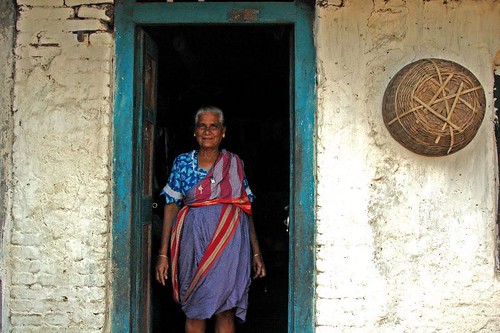
Listened to Celestine, in her purple sari as she sings me some Songs of Korlai, in a lost Portuguese of the Konkan.
She sat us down just in front of the altar of Korlai’s old church and picked up a worn out looking note book from one of the drawers. As we settled down on one of the creaky benches of this old church she began to sing. In an aging baritone words curled out with a beautiful melody. This was the song of Korlai, a song in ancient Kristi.
Which when loosely translated into English means :
This was a haunting song about Maria Madelena; the song just like the language it was sung in are mere Ghosts of Portugal in Maharashtra soon to disappear.
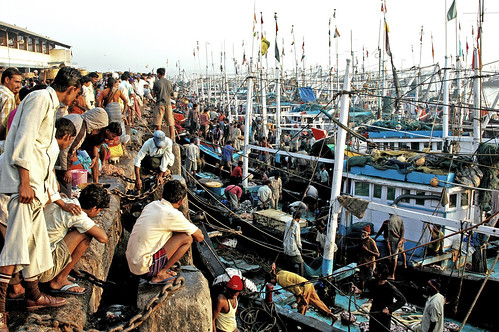
Glistening pomfret and Smoldering beedis, Ferry Warf, Mazgaon, is a daring mix of the bright colours of the machiwalli’s saris, dried salted fish, and the flowing melt of sea-scented blocks of ice. It smells of diesel exhaust and fish guts. The visuals are of glistening pomfret and smoldering beedis; drying bombils and piles of prawns; of turbulence in the Arabian Sea, and the squid-ink backwaters; and the air fills with crude fish-talk Marathi that end with profanities chewed up and spat into the mucky sea like the red gutka (chewing tobacco) that stains the city walls.
February

The Women of Akbarpura, a look at Microfinance in rural Rajasthan
The business plans backed by micro financiers tend to be breathtakingly simple. Take Zaina Begum, a successful micro-entrepreneur in Akbarpura. Zaina runs a tiny chai stand by the Alwar-Jaipur highway usually catering to truckers and villager alike. The place cost almost nothing to build: roughly-hewn bamboo props up a ceiling of thatch and old dustbin liners and there are no walls to speak of. The menu is unpretentious. “We only serve chai and biscuits,” she says. By taking out a series of small loans from her local Self help group (SHG) and the NABARD Zaina was able to source her tea wholesale rather than retail. She now employs three people, has repaid most of her loans, and swaggers around town on a second-hand Luna.

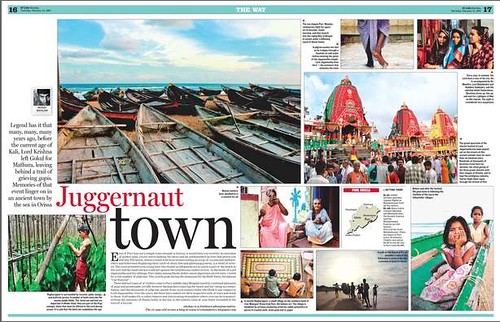
Nominated and won the Best Indibloggies Photoblog thingie and a photo-essay published in HT [below].
March
![Petals, Toil and Business at Dadar’s Phulgalli [PHOTO 4] - The Lotus](http://farm1.static.flickr.com/145/436346460_4ebd585d73.jpg)
![Petals, Toil and Business at Dadar’s Phulgalli [PHOTO 5] - Flower Power](http://farm1.static.flickr.com/173/436474472_4ee1a98c66.jpg)
Flower Flower, In this congregated mass of humanity there is colour so vibrant and aromas so powerful that it would match that of any perfumery in the world. Eyes drown in the colour and your nose in the fragrance of a million flowers all stacked in baskets in multitude. A kaleidoscope for your senses. Dadar Phulgalli [flower-lane] takes your traditional Bombay smells of sweat, toil, paint, iron and turns them into the smell of marigolds.. Wipe your brow and you find petals in addition to sweat.
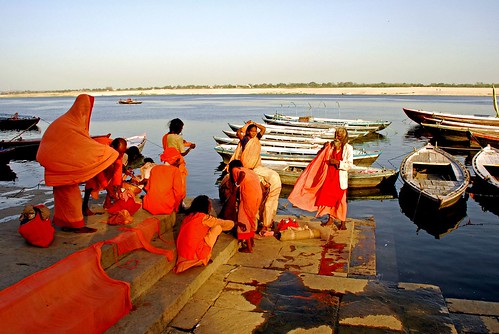
Varanasi, The Eternal Paradox
It is now time to find the Ganges and when I do I sit myself on one of the many steep steps that make up Dashashvamedh ghat, the main bathing ghat that also bears witness to the aarti in the evening. Of the lakhs of pilgrims that come to Varanasi each year, many of them will stop to bathe here first. The city’s waterfront stretches out on either side, a long curve of the river bend made into a series (eighty or so) of stepped waterfront ghats, each with a tall fleet of steps from the Ganges to the level of the city’s winding streets. The ghats are the theatres of life that bring the magic of Varanasi to life; you can stroll the entire three kilometer stretch over a whole day and never be bored. As I sit here sipping on my chai(tea) in a kulhurh (earthen pot) watching pilgrims bathe, they stand in my sight, waist-deep in the glistening water at a distance of perhaps a few unwound sarees. In unison they cup the river in their hands and then let it stream down their face. I imagine it is lukewarm, filmed with soap, oil and Himalayan alluvial, water that both soils and cleans at the same time just like the city it flows in.
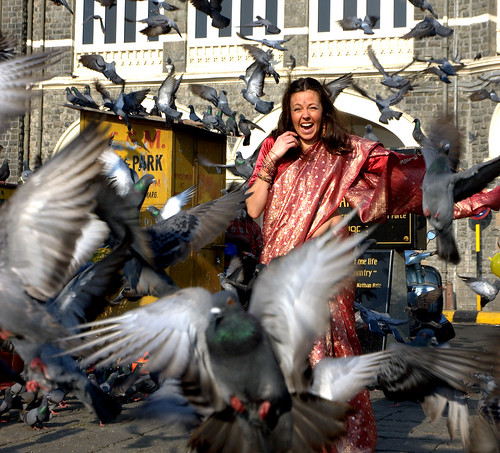
A picture of mine was published on the cover of a Saturday edition of the Daily Telegraph.
April
![Dhobi Ghat [Photo 4]](http://farm1.static.flickr.com/172/441754692_c2b303511c.jpg)
A visit to Mumbai's Dhobhi Ghat.
Standing in a foot of soapy water in each of these cells is the Dhobi –the laundryman– and he swings the piece of clothing he is washing over his head to hit a flagstone at the base of his pen. He has the action of an old-style lumberjack cutting wood with a long handle hatchet. Laundry from all over Mumbai comes here and it occurs to me that maybe later one of those Dhobis will be flogging a light canvas jeans with a strange but unusually attractive hole in them. Each dhobhi pen or vat is connected with the drainage line. The vat is filled with soapy water. The Dhobi Ghat has about 750 stones and at about 1000 clothes per stone per day it works out to about 7.5 lakh clothes daily.
May
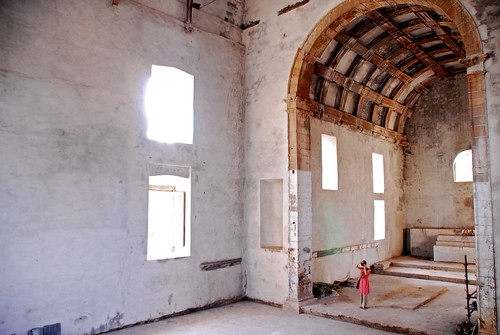
The Lost City of Vasai.
Trees and bushes block every trail. The ruins you can see are draped in moss and creepers, their walls dangerously pregnant with pepal shoots. There are other ruins the forest has swallowed whole. The state transport bus from Vasai Road station dropped me close to a ruin where fishermen were mending nets. Only the walls and a vaulted roof, at the far end of the building, remain. Two raised platforms under the vaulted portion suggest this was a church. The walls have slits like windows that make you imagine them as stained glass windows.

Calcutta Coffee House.
Here under the high whirling ceiling fans and in the environs of these fading mildew covered brown walls sit tragic young writers, Marxists, philosophers, students, economists and now IT workers with puff-pastry egos; the air was thick with philosophical rantings as dense as the number on their glasses . More than any other coffeehouse, perhaps, the Kolkata's Coffee House exemplified the the Antelle attitude, a monument to the glory of Calcutta and its uplifting elixir, caffeine and the rich conversation it spewed.
June
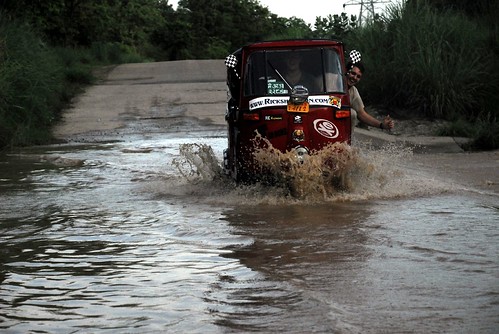
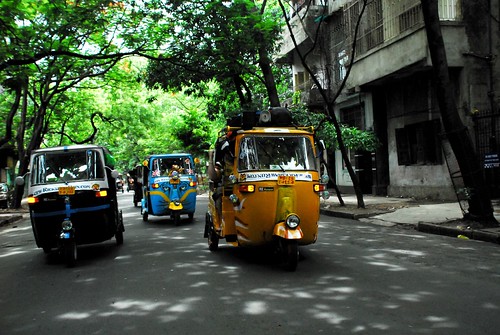
June is the month of the Monsoons in India. 3750km. Auto-rickshaw. Through the Himalayas. Yes, we have completely lost it. No, not the auto-rickshaw. Yes we drove a toaster on 3 wheels from Calcutta to Manali across the Himalayas through Nepal.
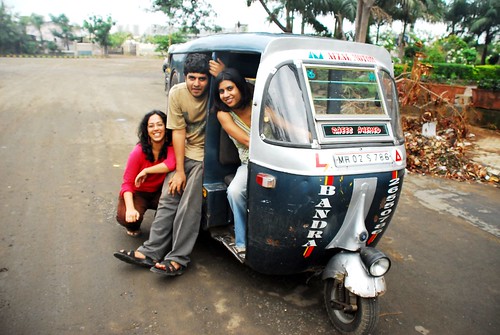
1. Learn how to ride a Auto-Rickshaw.
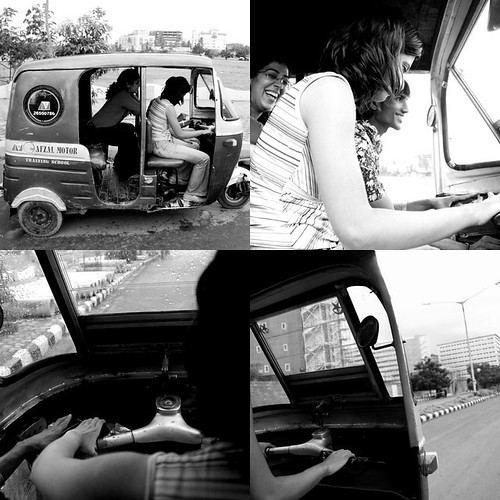
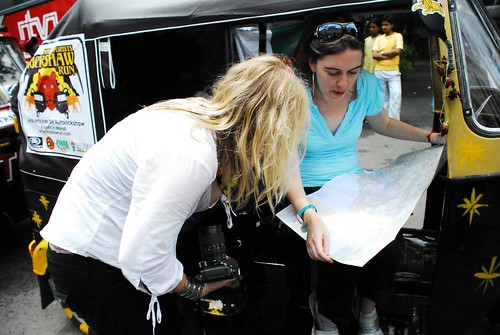
Shez, in her guestpost writes us a rickshaw riding 101.
2. Launched Teesra.org
The pictures followed.
June
More Rickshaw Runs adventures in Kathmandu.
Tanks full, jerry cans filled we continued our descent into the Nepalli capital, to Thamel to what our guidebook described as “the intersection of Hippiedom and Hinduism, where Haight-Ashbury meets the Himalayas.”
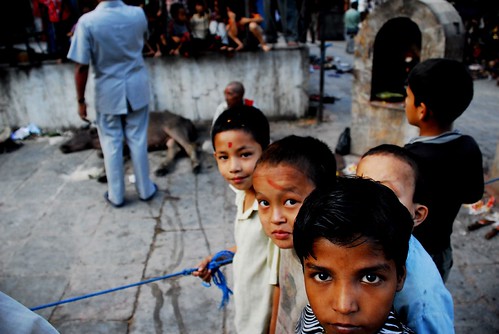
We spent the next day in Kathmandu exploring the old city, Saira resting in the hotel parking lot – catching a cherished glimpse of the Kumari, or living goddess, a prepubescent girl who was consigned to the upper-floor temple room where she was served as a flesh and blood incarnation of divinity. The pack roamed Durbar square; Neha in her curiousness quizzing our tour guide, Shez playing with smiling children and hatching silent dreams of opening orphanages in the Nepalli country side and me in the corner following them both sheepishly taking pictures of course.
Angkor First Impressions
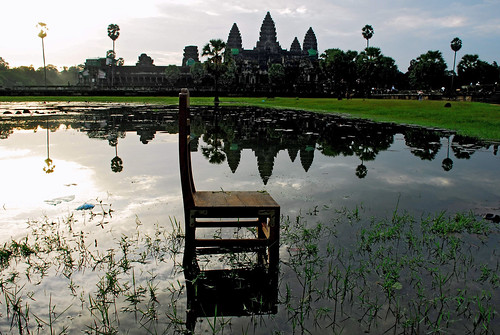
Just before dawn, the towers of Angkor Wat are ink shadows etched under the paling indigo of blue of the tropical night. The first hint of dawn washes the sky with pink and reveals the mist wreathing the stones. The sun rises behind the temple’s luxuriant forest, and the first rays gild the pinnacle of the central sanctuary. Gradually the light slides down the towers, bathing the walls and galleries, and strengthens from apricot to gold as the sun enriches the spectrum until the great monument glows from within. It is a transcendental experience.
Fragrance and Spice Khmer Style
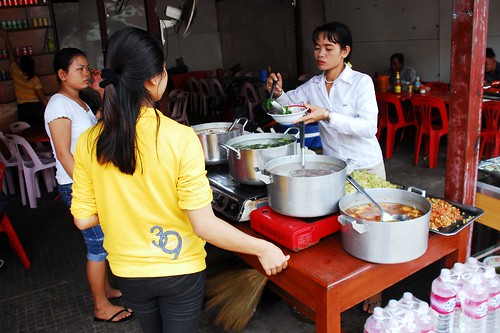
The streets in Cambodia are littered with street hawkers selling their particular dish – from fried noodles to baguettes to charcoal-grilled meats and fresh fruit and ice-cream - from hand-carts or from baskets dangling from a shoulder pole. My next snack is never far. When in search for a cheap meal I find myself a market – which I find comes with an entire coterie of food stalls each selling their own specialty dishes – noodles soups, rice dumplings and rice porridge. Turn a corner and I'll find meat being grilled on charcoal, to be served with a spicy raw papaya salad and herbs, best downed with an Angkor Beer.
![Khmer Boxing : You Like Pradal Serey ? [Blog Post]](http://farm2.static.flickr.com/1161/850149989_e5b0cd77e6.jpg)
I was on the receiving end of some Khmer Boxing.
Again they ran toward each other, locked up, and spent the next three minutes exchanging knees, one-for-one. Again, they did the same routine. I've never seen anything like it. Their chests were pulped like raw meat, but they didn't seem to care. It was a test of fortitude to see who could remain standing. The fight over, they exchanged smiles and shook hands, the gloves were off and we went on a series of warm-up exercises.
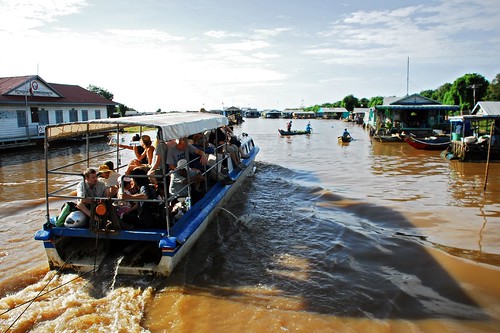
Floating Villages of the Tonle Sap
I fell in love with the elemental power and beauty of the waterways of Cambodia . An entrancing waterlogged world, a stream so abundant and all-providing, a true river of life for its millions. Crisscrossing its pale-brown waterways on flitting boats and ferries, I was moved by the grace and purpose of people absorbed in its amphibious rhythms: journeying, planting, harvesting and netting.
August

A middle-aged Khmer women walks past the row cells at Tuol Sleng Genocide Museum. The Heart of Darkness.
By the time we got to the three rooms whose walls were lined with photos of the victims I was numb. Looking at the faces of thousands of Cambodian men, women and children I searched for something that might tell me their story. The Khmer Rouge had been meticulous in keeping records of their acts, including these photos of each of their victims, which now act as a chilling reminder that real people suffered and died here.
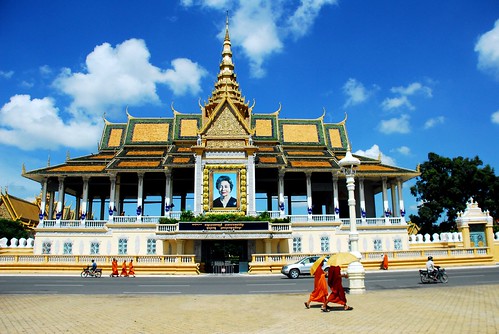

My time in Phnom Penh.
I'm staying on the first floor of the Hotel Renakse, a bright yellow neo-classical French building looking out at the Royal Palace. As you walk out you notice the streets of Phnom Penh do not have traffic signals; instead, uniformed policemen stand on raised metal boxes, in the intersection directing the sometimes chaotic flow of traffic. I've found my favorite way to travel in Phnom Penh is by cyclos. They're the opposite of cycle-rickshaw in India as they pretty much resemble a wide wheel chair attached to a cycle. You just take a seat and pay the driver to wheel around the city as you bounce and laugh as the driver pedals you the congested city streets.
September
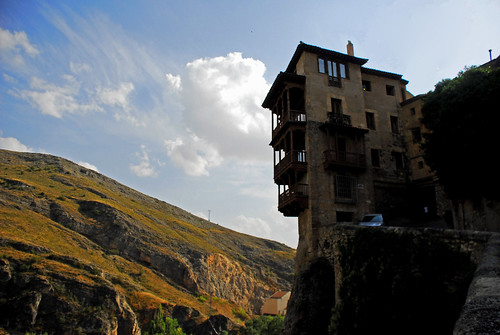
Hanging House of Cuenca
Cuenca is an ancient city with a 12th-century core. In 1177, Alfonso VIII “liberated” it from the Moors, and the construction of a central cathedral began. While quaint and, occasionally, exquisite Cuenca is a town from most tourist itineraries, a hidden jewel. The city lies at the heart of Castile-La Mancha, the sparsely populated central section of the country. The romance here is literary: this is the Spain of Cervantes and “Don Quixote.”
As I reclined in my chair and nursed my beer I’am reminded of the first line of Cervantes’s classic Don Quixote de la Mancha
Cuenca could very well be that proverbial village in La Mancha unchanged, preserved in limestone.
October

More Ricksha' Trippin' stories :)
November
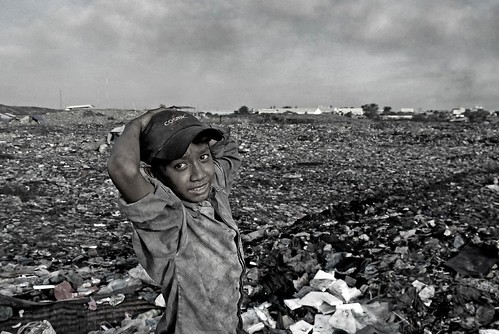
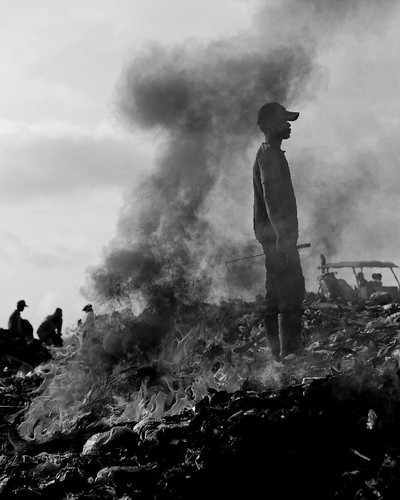
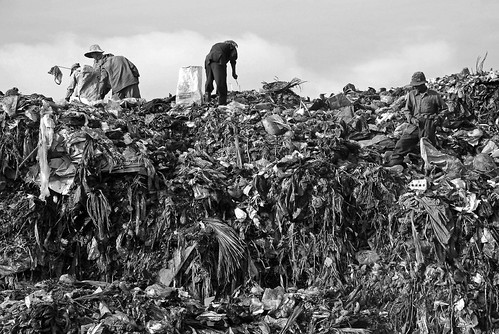
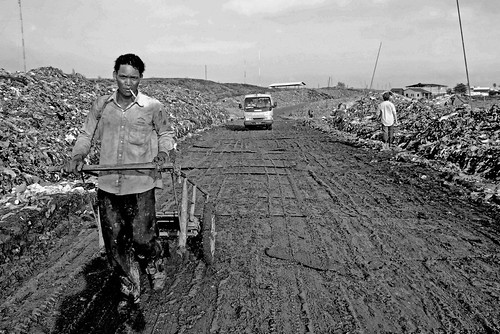
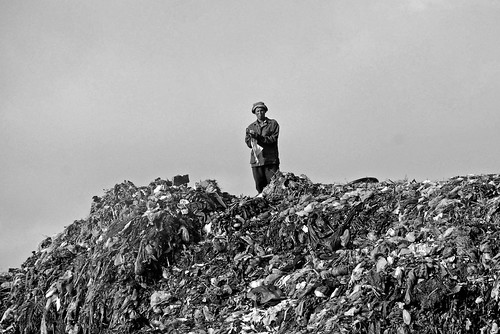
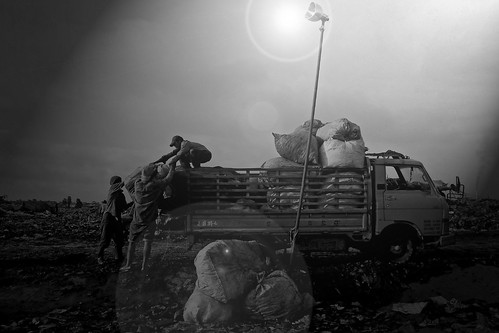
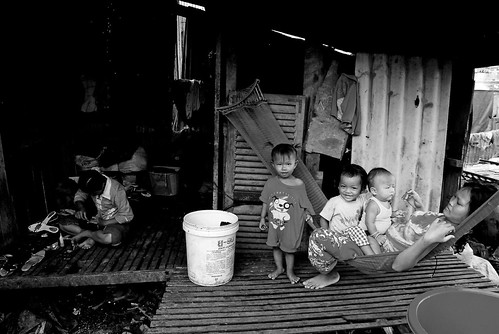
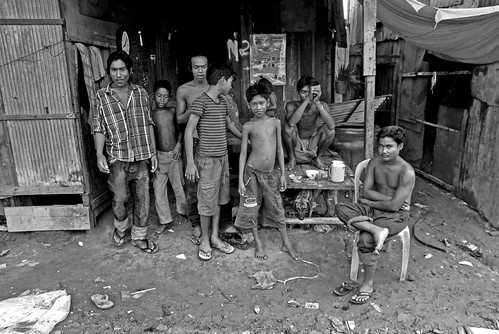
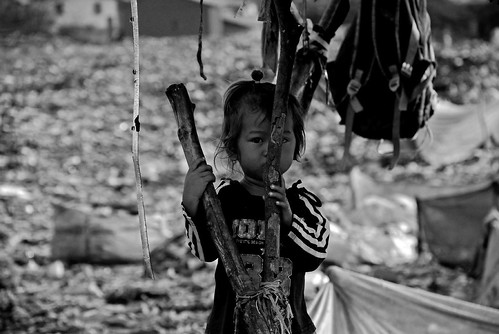
I chronicle my short visits to the largest garbage dump in Knee Deep in Stung Meanchey, Cambodia
'I'm looking for something good, something I can sell,'' the boy said one day as he poked his stick in a small mound, strewn with crushed milk cartons, detergent and condoms. ''I know it's difficult work, but I want to help my family. I need to help my family
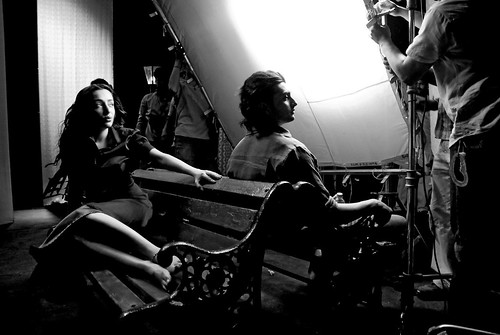
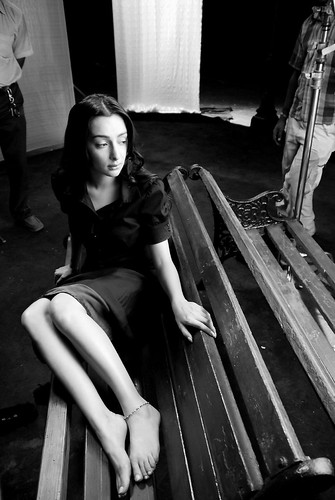
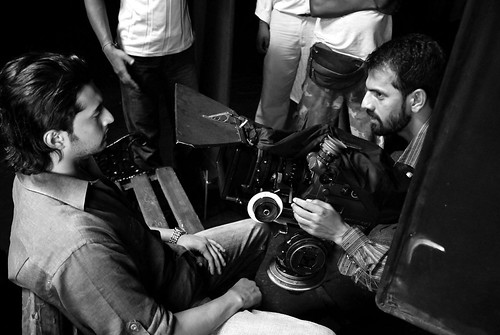
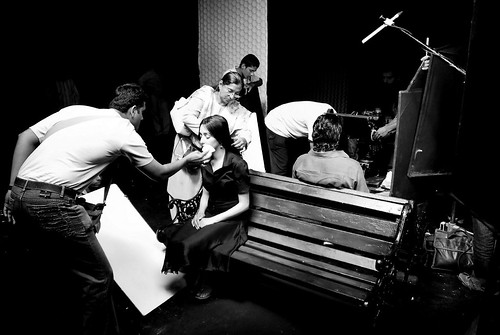
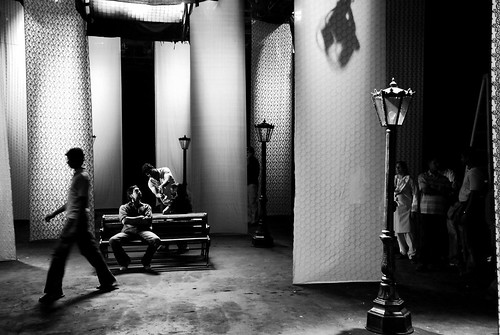
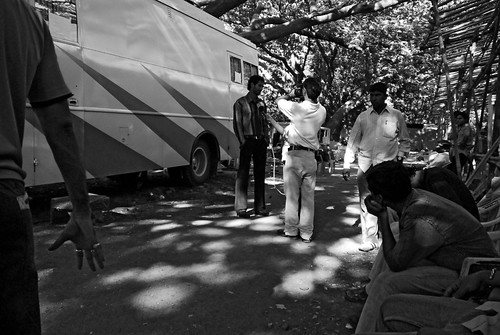
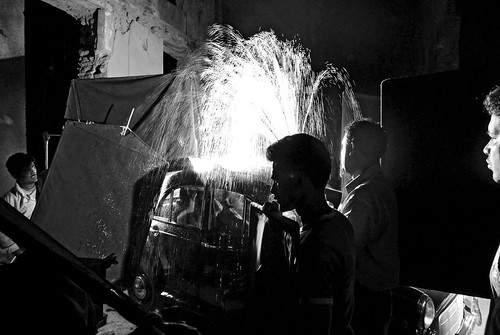
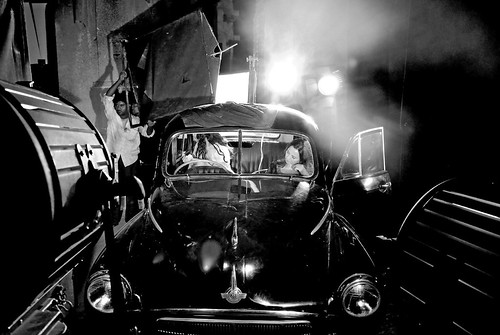
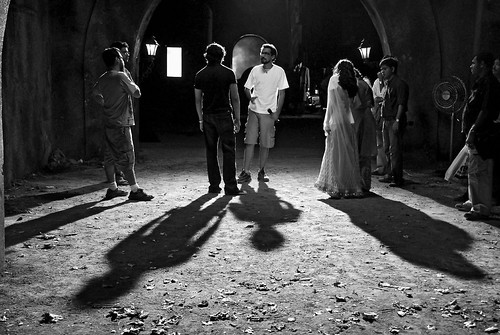
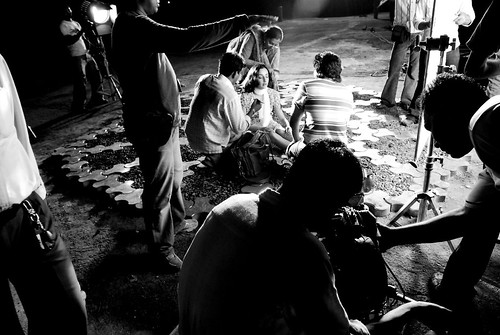
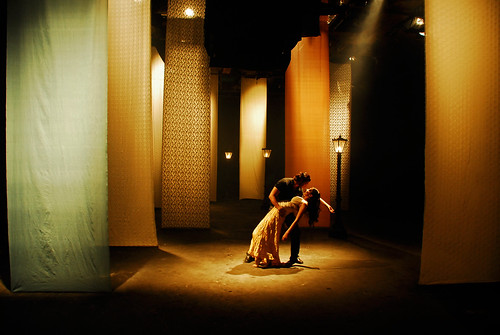
On the Sets of Bollywood
Phew !!! That pretty much concludes my year in Pictures. It's been an eventful year and I hope 2008 is as eventful. Happy Holidays and Thank you
for reading.
The advantage of populating your blog with pictures is that come year end you know exactly what you’ve been up to throughout the year. Let us take a look.
[ALSO SEE : 2006 The Blog that was ]
January
Listened to Celestine, in her purple sari as she sings me some Songs of Korlai, in a lost Portuguese of the Konkan.
She sat us down just in front of the altar of Korlai’s old church and picked up a worn out looking note book from one of the drawers. As we settled down on one of the creaky benches of this old church she began to sing. In an aging baritone words curled out with a beautiful melody. This was the song of Korlai, a song in ancient Kristi.
“Maldita Maria Madulena,
Maldita firmosa,
Ai, contra ma ja foi a Madulena,
Vastida de mata!”
Which when loosely translated into English means :
Cursed Maria Madalena,
Cursed Beautiful one,
Oh, against my will it was Madalena,
Dressed in leaves and branches!
This was a haunting song about Maria Madelena; the song just like the language it was sung in are mere Ghosts of Portugal in Maharashtra soon to disappear.
Glistening pomfret and Smoldering beedis, Ferry Warf, Mazgaon, is a daring mix of the bright colours of the machiwalli’s saris, dried salted fish, and the flowing melt of sea-scented blocks of ice. It smells of diesel exhaust and fish guts. The visuals are of glistening pomfret and smoldering beedis; drying bombils and piles of prawns; of turbulence in the Arabian Sea, and the squid-ink backwaters; and the air fills with crude fish-talk Marathi that end with profanities chewed up and spat into the mucky sea like the red gutka (chewing tobacco) that stains the city walls.
February
The Women of Akbarpura, a look at Microfinance in rural Rajasthan
The business plans backed by micro financiers tend to be breathtakingly simple. Take Zaina Begum, a successful micro-entrepreneur in Akbarpura. Zaina runs a tiny chai stand by the Alwar-Jaipur highway usually catering to truckers and villager alike. The place cost almost nothing to build: roughly-hewn bamboo props up a ceiling of thatch and old dustbin liners and there are no walls to speak of. The menu is unpretentious. “We only serve chai and biscuits,” she says. By taking out a series of small loans from her local Self help group (SHG) and the NABARD Zaina was able to source her tea wholesale rather than retail. She now employs three people, has repaid most of her loans, and swaggers around town on a second-hand Luna.
Nominated and won the Best Indibloggies Photoblog thingie and a photo-essay published in HT [below].
March
Flower Flower, In this congregated mass of humanity there is colour so vibrant and aromas so powerful that it would match that of any perfumery in the world. Eyes drown in the colour and your nose in the fragrance of a million flowers all stacked in baskets in multitude. A kaleidoscope for your senses. Dadar Phulgalli [flower-lane] takes your traditional Bombay smells of sweat, toil, paint, iron and turns them into the smell of marigolds.. Wipe your brow and you find petals in addition to sweat.
Varanasi, The Eternal Paradox
It is now time to find the Ganges and when I do I sit myself on one of the many steep steps that make up Dashashvamedh ghat, the main bathing ghat that also bears witness to the aarti in the evening. Of the lakhs of pilgrims that come to Varanasi each year, many of them will stop to bathe here first. The city’s waterfront stretches out on either side, a long curve of the river bend made into a series (eighty or so) of stepped waterfront ghats, each with a tall fleet of steps from the Ganges to the level of the city’s winding streets. The ghats are the theatres of life that bring the magic of Varanasi to life; you can stroll the entire three kilometer stretch over a whole day and never be bored. As I sit here sipping on my chai(tea) in a kulhurh (earthen pot) watching pilgrims bathe, they stand in my sight, waist-deep in the glistening water at a distance of perhaps a few unwound sarees. In unison they cup the river in their hands and then let it stream down their face. I imagine it is lukewarm, filmed with soap, oil and Himalayan alluvial, water that both soils and cleans at the same time just like the city it flows in.
A picture of mine was published on the cover of a Saturday edition of the Daily Telegraph.
April
A visit to Mumbai's Dhobhi Ghat.
Standing in a foot of soapy water in each of these cells is the Dhobi –the laundryman– and he swings the piece of clothing he is washing over his head to hit a flagstone at the base of his pen. He has the action of an old-style lumberjack cutting wood with a long handle hatchet. Laundry from all over Mumbai comes here and it occurs to me that maybe later one of those Dhobis will be flogging a light canvas jeans with a strange but unusually attractive hole in them. Each dhobhi pen or vat is connected with the drainage line. The vat is filled with soapy water. The Dhobi Ghat has about 750 stones and at about 1000 clothes per stone per day it works out to about 7.5 lakh clothes daily.
May
The Lost City of Vasai.
Trees and bushes block every trail. The ruins you can see are draped in moss and creepers, their walls dangerously pregnant with pepal shoots. There are other ruins the forest has swallowed whole. The state transport bus from Vasai Road station dropped me close to a ruin where fishermen were mending nets. Only the walls and a vaulted roof, at the far end of the building, remain. Two raised platforms under the vaulted portion suggest this was a church. The walls have slits like windows that make you imagine them as stained glass windows.
Calcutta Coffee House.
Here under the high whirling ceiling fans and in the environs of these fading mildew covered brown walls sit tragic young writers, Marxists, philosophers, students, economists and now IT workers with puff-pastry egos; the air was thick with philosophical rantings as dense as the number on their glasses . More than any other coffeehouse, perhaps, the Kolkata's Coffee House exemplified the the Antelle attitude, a monument to the glory of Calcutta and its uplifting elixir, caffeine and the rich conversation it spewed.
June
June is the month of the Monsoons in India. 3750km. Auto-rickshaw. Through the Himalayas. Yes, we have completely lost it. No, not the auto-rickshaw. Yes we drove a toaster on 3 wheels from Calcutta to Manali across the Himalayas through Nepal.
1. Learn how to ride a Auto-Rickshaw.
Shez, in her guestpost writes us a rickshaw riding 101.
2. Launched Teesra.org
The pictures followed.
June
More Rickshaw Runs adventures in Kathmandu.
Tanks full, jerry cans filled we continued our descent into the Nepalli capital, to Thamel to what our guidebook described as “the intersection of Hippiedom and Hinduism, where Haight-Ashbury meets the Himalayas.”
We spent the next day in Kathmandu exploring the old city, Saira resting in the hotel parking lot – catching a cherished glimpse of the Kumari, or living goddess, a prepubescent girl who was consigned to the upper-floor temple room where she was served as a flesh and blood incarnation of divinity. The pack roamed Durbar square; Neha in her curiousness quizzing our tour guide, Shez playing with smiling children and hatching silent dreams of opening orphanages in the Nepalli country side and me in the corner following them both sheepishly taking pictures of course.
Angkor First Impressions
Just before dawn, the towers of Angkor Wat are ink shadows etched under the paling indigo of blue of the tropical night. The first hint of dawn washes the sky with pink and reveals the mist wreathing the stones. The sun rises behind the temple’s luxuriant forest, and the first rays gild the pinnacle of the central sanctuary. Gradually the light slides down the towers, bathing the walls and galleries, and strengthens from apricot to gold as the sun enriches the spectrum until the great monument glows from within. It is a transcendental experience.
Fragrance and Spice Khmer Style
The streets in Cambodia are littered with street hawkers selling their particular dish – from fried noodles to baguettes to charcoal-grilled meats and fresh fruit and ice-cream - from hand-carts or from baskets dangling from a shoulder pole. My next snack is never far. When in search for a cheap meal I find myself a market – which I find comes with an entire coterie of food stalls each selling their own specialty dishes – noodles soups, rice dumplings and rice porridge. Turn a corner and I'll find meat being grilled on charcoal, to be served with a spicy raw papaya salad and herbs, best downed with an Angkor Beer.
I was on the receiving end of some Khmer Boxing.
Again they ran toward each other, locked up, and spent the next three minutes exchanging knees, one-for-one. Again, they did the same routine. I've never seen anything like it. Their chests were pulped like raw meat, but they didn't seem to care. It was a test of fortitude to see who could remain standing. The fight over, they exchanged smiles and shook hands, the gloves were off and we went on a series of warm-up exercises.
Floating Villages of the Tonle Sap
I fell in love with the elemental power and beauty of the waterways of Cambodia . An entrancing waterlogged world, a stream so abundant and all-providing, a true river of life for its millions. Crisscrossing its pale-brown waterways on flitting boats and ferries, I was moved by the grace and purpose of people absorbed in its amphibious rhythms: journeying, planting, harvesting and netting.
August
A middle-aged Khmer women walks past the row cells at Tuol Sleng Genocide Museum. The Heart of Darkness.
By the time we got to the three rooms whose walls were lined with photos of the victims I was numb. Looking at the faces of thousands of Cambodian men, women and children I searched for something that might tell me their story. The Khmer Rouge had been meticulous in keeping records of their acts, including these photos of each of their victims, which now act as a chilling reminder that real people suffered and died here.
My time in Phnom Penh.
I'm staying on the first floor of the Hotel Renakse, a bright yellow neo-classical French building looking out at the Royal Palace. As you walk out you notice the streets of Phnom Penh do not have traffic signals; instead, uniformed policemen stand on raised metal boxes, in the intersection directing the sometimes chaotic flow of traffic. I've found my favorite way to travel in Phnom Penh is by cyclos. They're the opposite of cycle-rickshaw in India as they pretty much resemble a wide wheel chair attached to a cycle. You just take a seat and pay the driver to wheel around the city as you bounce and laugh as the driver pedals you the congested city streets.
September
Hanging House of Cuenca
Cuenca is an ancient city with a 12th-century core. In 1177, Alfonso VIII “liberated” it from the Moors, and the construction of a central cathedral began. While quaint and, occasionally, exquisite Cuenca is a town from most tourist itineraries, a hidden jewel. The city lies at the heart of Castile-La Mancha, the sparsely populated central section of the country. The romance here is literary: this is the Spain of Cervantes and “Don Quixote.”
As I reclined in my chair and nursed my beer I’am reminded of the first line of Cervantes’s classic Don Quixote de la Mancha
“In a village in La Mancha (whose name I do not care to recall) there lived, not very long ago, one of those gentlemen who keeps a lance in the lance-rack, an ancient shield, a skinny old horse, and a fast greyhound”
Cuenca could very well be that proverbial village in La Mancha unchanged, preserved in limestone.
October
More Ricksha' Trippin' stories :)
November
I chronicle my short visits to the largest garbage dump in Knee Deep in Stung Meanchey, Cambodia
'I'm looking for something good, something I can sell,'' the boy said one day as he poked his stick in a small mound, strewn with crushed milk cartons, detergent and condoms. ''I know it's difficult work, but I want to help my family. I need to help my family
On the Sets of Bollywood
Phew !!! That pretty much concludes my year in Pictures. It's been an eventful year and I hope 2008 is as eventful. Happy Holidays and Thank you
for reading.