On the Sets of Bollywood

Sorry my hosting is down for a bit (hence the super basic template) - this should be remedied in 24hours or so.
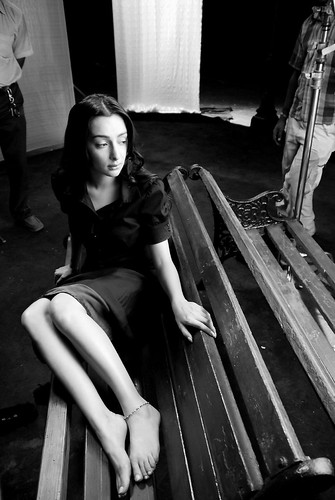
On the sets

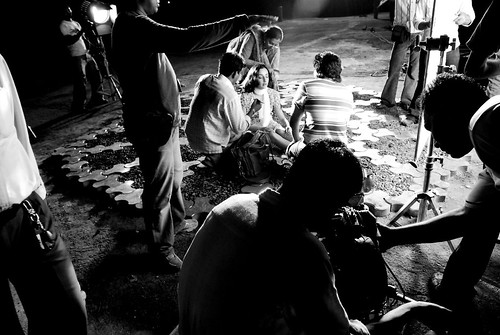
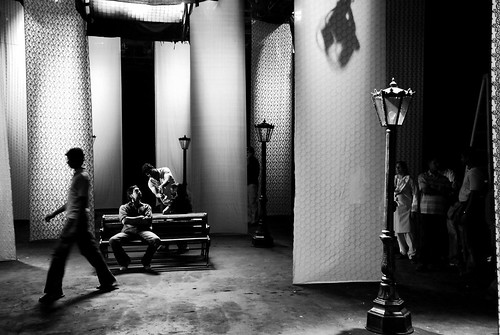
The film director is directing a scene in which protagonist meets her lover on park bench. I was in Film City, a 500-acre wonderland of fake mansions, poverty-stricken villages, schoolhouses, and police stations on the outskirts of Mumbai, where many of the big-budget Bollywood films are shot. I turn around me to find the actors sits on four plastic chairs stacked on top of each other, their arms bound by packing tape, because he needs a high chair to keep his long legs comfortable. Meanwhile the light technician shutter about setting up lights for the next scene.

In a movie set outside Mumbai. It's after midnight on a sweltering May night. A spectacled man booms commands into a microphone. The camera zooms in on the actor and swirls around a rott-iron bench surrounded by tinsel and fairy lights. A song slowly starts.

Here are some pictures I caught that sweltering May night under the artificial lights.

Scene 1 :
Boy meets girl on park bench [see below]. If you are wondering what happens next - the actress smiles and caresses her legs - while the camera takes a close-up shot. Yes it was very corny.
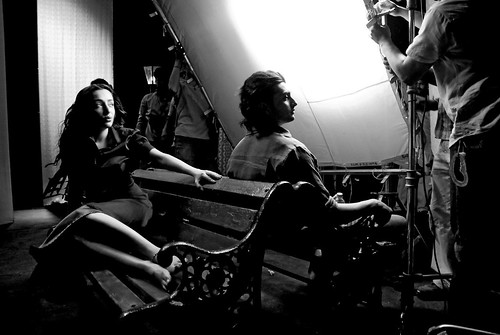
Actors do what they do best

Behind the Scenes

1.
Director of Photography preps the actor for next scene.
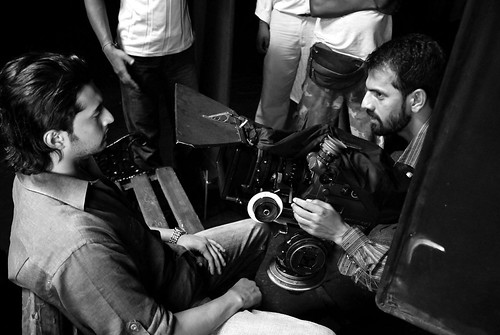
Salaam Mumbai

2.
Make-up.

Check your hair, A final touch-up and you are ready for another take

3.
Shot after shot, take after take - an entire of army of men flutter about behind the scenes to etch celluloid with moving images.

From the make-up to the man, tabbing at a large fan - they all play their part.
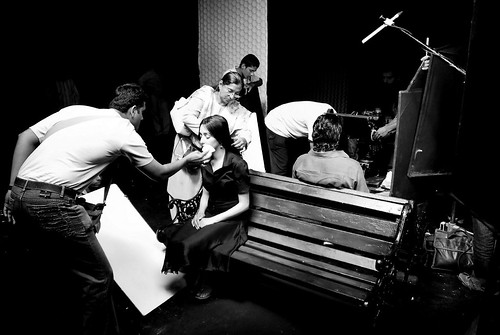
In beteween scenes

Quiet on the set

Sound.... Action ... Roll Camera

4.
What one does not realize that the largest component of time spend on a set is that done waiting.
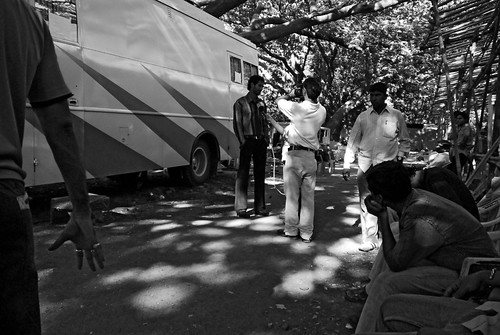
Waiting

Feeding Dreams

Your usual Bollywood story would go something like this
:

Boy from Bombay slums meets girl from suburbs. Girl's family object to boy. Girl is about to be married off but boy murders the groom. Boy is killed during shoot-out. While visiting relatives in Sydney, girl meets boy's identical twin, who has been separated from boy one at birth and raised as a Calcutta yuppie prince.

They fall in love, everyone's family approves. For Bollywood song settings, the boy and girl must change clothes and backdrops at least three times a duet; perm between Delhi campus, British shopping centre, Australian beach, Raja's palace, Swiss Alps, Egyptian pyramids and Scottish mansion. The more mountains the better. The big wedding number is a must. If you can fit in happy villagers celebrating the harvest so much the better.

& the Story Continues

1.
Raju holds up a giant green pipe over a 1960s Hindustan Motor's Baby Hindustan to make it rain. The camera trolley on the other hand moves forward as if to give you the sensation that the car is moving. All tricks of the trade
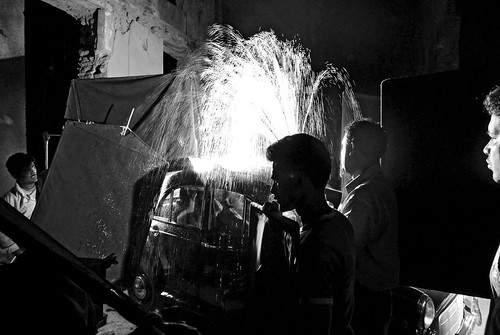
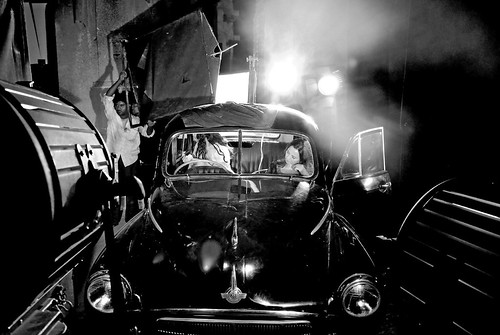
They can make it rain.


Standby on set

2.
Scripts, however, are not always considered that important by the directors, who have a tradition of, well, making it up as they go along. Director is helping his actors plug in the story line
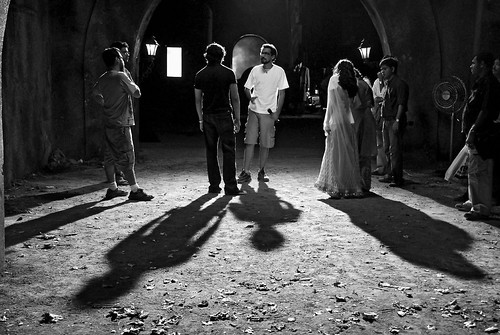
The Director's Actor

3.
Boy meets Girl Part Deux

4.
It all ends in song and dance and everybody concerned lives happily ever after.
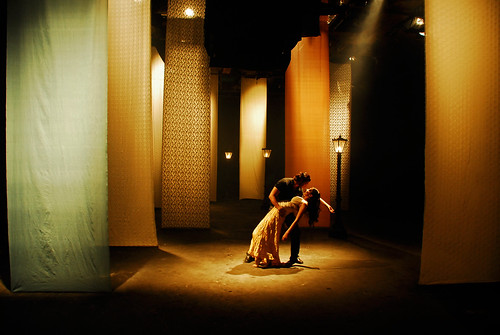
RK Studios Moment

Take a look at my other exploits on a tv soap set for Tehelka.
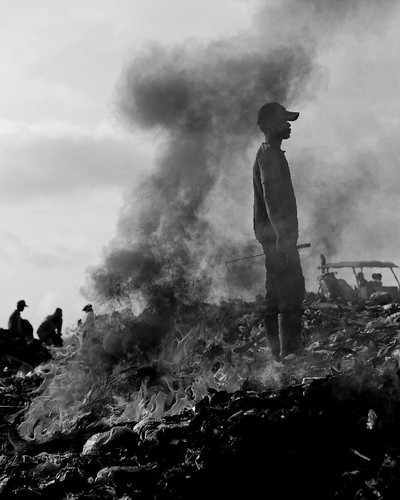
Knee Deep in Stung Meanchey, Cambodia

The Fire Burns on; Stung Meanchey, Cambodia

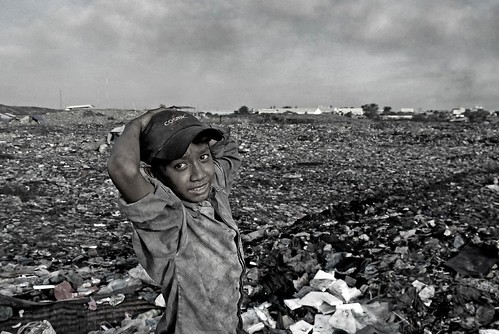
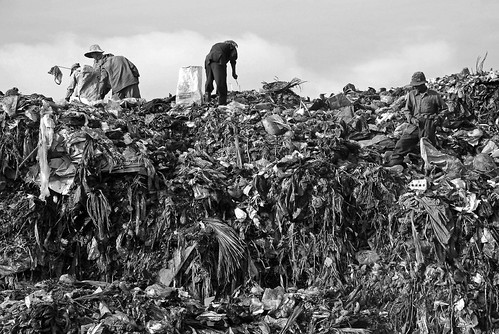
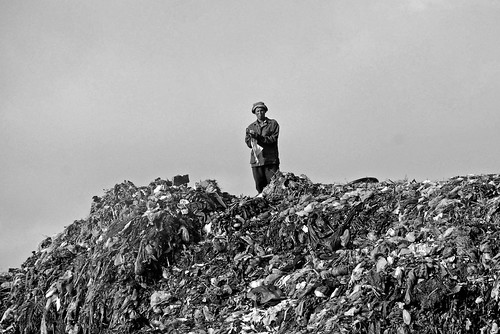
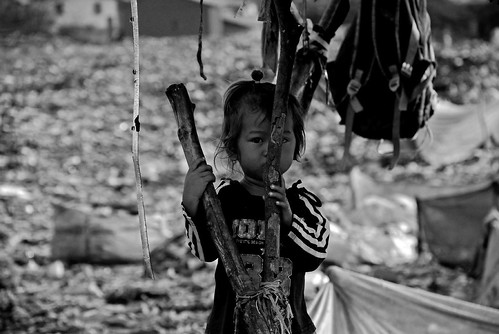
Knee deep in garbage,Kong Siehar, 14, combs through giant mounds of rubbish for tin cans, plastic bags and other recyclable goods. It is one of the saddest sights in Phnom Penh, a sprawling 100-acre garbage dump where trash fires burn and plumes of black smoke choke the air with toxic gases.
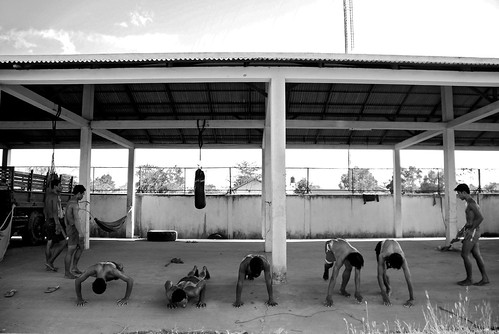
'I'm looking for something good, something I can sell,'' the boy said one day as he poked his stick in a small mound, strewn with crushed milk cartons, detergent and condoms. ''I know it's difficult work, but I want to help my family. I need to help my family.''

Ragpicker Boy, Cambodia

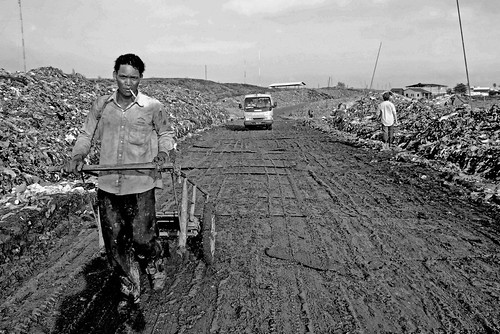
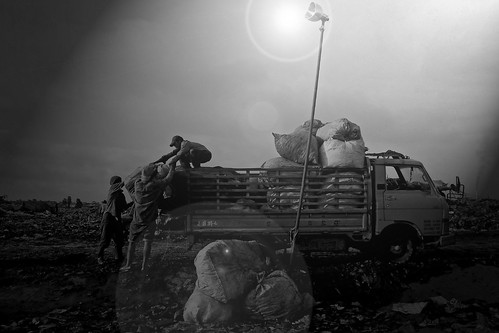
Children toil for about 50 cents a day here at the Stung Meanchey Municipal Waste Dump. It is perilous work. The waste is soggy, and huge bulldozers rumble through here, dumping pile upon pile. The children show up at local health clinics with rashes, infections, cuts and bruises.

Tower of Garbage, Cambodia

Stung Meanchey, Cambodia

Stung Meanchey, Cambodia

Vietnamese Chair Makers, Cambodia

Trudging through Stung Meanchey I come to realize, ''This is the closest thing to hell on earth I've ever seen."

When a vehicle -- any vehicle -- crosses into the dump site, the children fling their bags of tin cans in front of the wheels, hoping to crush their cans to increase the bag space.

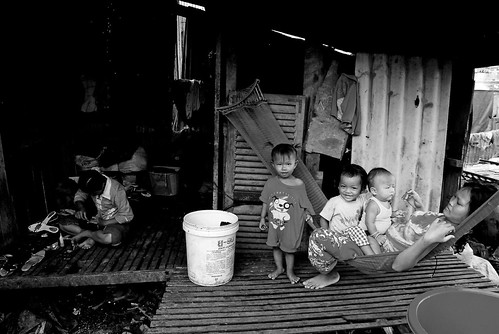
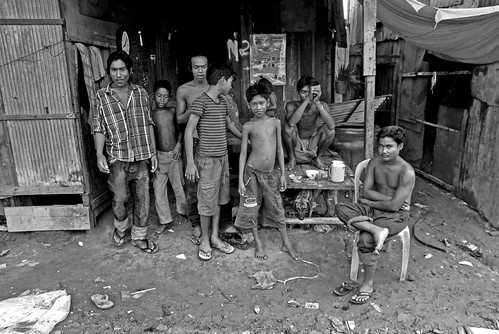
Many of the children here were born into impoverished families that moved to the area from the countryside after the end of Pol Pot's murderous rule. Instead of finding urban fortunes, many of them settled in a slum that was erected along the rim of Stung Meanchey, a dump infested with flies that gravitate to the leeching refuse, the dregs of a nation.

About 10,000 people live in the slum that borders Stung Meanchey. Their village, Preak Torl, a cluster of plywood shacks, clings to the dump's edge. Fumes from sewage and burning garbage fill the air. Pigs forage in the village's dirt lanes.

Stung Meanchey, Cambodia

Waiting, Cambodia

Rith Preun, a girl of 12 who still works at the dump, is trying to earn money to pay off her parents' debt.

She wears a stained white blouse and a pair of soiled long pants. Her sandals are too big, and her hair, which bobs down to her shoulders, is tucked under a dusty, purple knit hat that protects her eyes from the scorching sun.

She carries a metal pick to help her poke through the garbage, and a white burlap sack that she uses to collect her recyclable goods. ''I've been working here for three years,'' she said. Stitched to her pants waszap a Winnie-the-Pooh patch.

My other Cambodia posts

Stung

Ricksha' Trippin'

Originally published in Men's Health Magazine, October 2007

day1cal 025

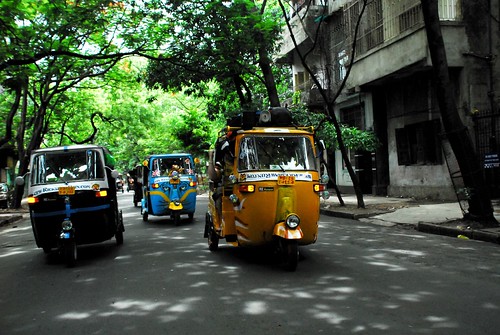
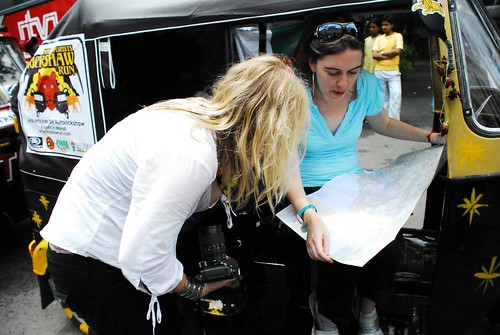
A Few months ago me and two of friends of volunteering ourselves into a race that involved driving over 3,000 km across India in the Monsoons over the Himalayas - if that wasn't harrowing enough we thought we'd do it in an mobile toaster on wheels - 3 wheels to be exact - yes we plan to ride an auto-rickshaw across India through torrential rains across the Himalayas.

There were many things we learnt on our trip so I thought I’d share spread the gyan to my fellow road tripping enthusiasts.

Road Tripping without Tripping Out – The Basic Philosophy of the Road

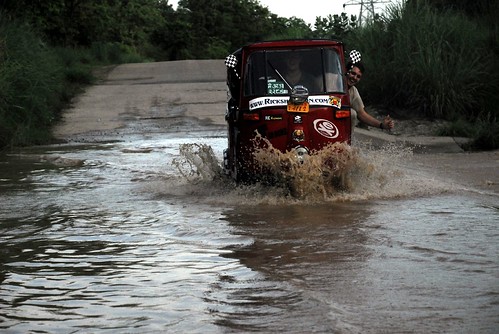
Through the water at Bardai National Park

Road tripping is a state of mind. To truly enjoy it, you must embrace the philosophy of the road, much like European backpackers must bring a mindset of art and culture and beachcombers must be prepared for umbrellas in their drinks and sand in their shorts.

First, there are no boring places on the open road—just places that require a little bit of searching to uncover the remarkable. The great Indian road trip is an adventure we always dreamed about: roving the scenic byways of our vast country, stumbling on new vistas and obscure cuisines, making friends in dust-speck villages, national parks and cities joining the pantheon of legendary crisscrossers before us. Like a hiking trail, every road trip has a beginning and an end, but only the journey counts. The middle, the asphalt glide, the motorized mantra, getting from Point A to Point B, is the purpose of the road trip, realizing that you’re supposed to be wherever you are. Enjoy being there.

Also enjoy the fact that your vehicle is in your control, so take it wherever your heart desires. While your road trip will most likely involve an itinerary with reservations, do not tie your bumper to a schedule.

The Master Plan – Plotting Your Course

DSC_0388

Your journey begins the first day you start planning your road trip, with anticipation as your accelerator pedal, floored and revving. So break out the map, grab a box of pushpins to highlight the highlights and let a little planning take you a long way.

Before the first pushpin digs into the wall, talk to friends and go online to identify the purpose of your trip. If your goal is four days of backcountry wandering, then all you need is a full tank of petrol and sharp eyes. If you plan include a final destination, like your Goa in one week, and then advance planning is crucial.

Once your purpose is set, consider your level of comfort. Are you the type who needs to know a reserved hotel room waits in the next city or will any roadside hotel suit your needs? Do you like your roads highlighted in yellow on your map, or do you keep your map in the glove box for emergencies only, allowing the winds of spontaneity to determine your course? Whatever your comfort level, be sure to ask your traveling companions for their opinions.

Once the bases are covered, get your guide book out and begin researching all the possible routes. But maps can’t tell you everything for example if certain mountain passes are blocked during the winter or if a festival or event in a city you plan to drive through will cause major delays – so it always best to double check all your research with locals on the road. Also, spend time on the Internet getting to know the smaller towns on your route. Treasures are often found in the most unlikely of places.

Before the Odometer Reaches 1

With your plan set and the trip already rambling in your mind, now is the time to make sure reality is on the same page.

The first and most vital step is to get your vehicle in top form. Whether you're traveling by car, truck, motorcycle or auto-rickshaw, your road trip will be smoother if your vehicle is ship-shape, or road-shape in this instance. Before you leave, have a mechanic check all the vehicle’s vitals: brakes, battery, fluid levels, tire pressure, light bulbs and any parts that need regular maintenance.

As with all long-distance road trips, it’s wise to bring emergency equipment such as a first-aid kit, flashlight, blankets/sleeping bags, drinking water and snacks,and jumper cables. Check the weather for your route and be prepared for rain and in mountain conditions with an ice scraper and chains for the tires is advisable

Safety – Don’t Wreck Your Trip

The last thing you want is to ruin your road-trip by getting into a accident. Safety is simply the number one concern for you, your traveling companions and everyone on or near a road, so always have the following safety tips on the tip of your mind while driving.

Pay attention. Practically all accidents involve inattention on the part of one or both drivers. Distraction comes in many guises: daydreaming sleepiness, fatigue and cell phones. Paying attention makes it possible for you to see, recognize and avoid the hazards lurking on the road; these are the three basic elements of defensive driving.

You are not psychic. You can never rely on what the other driver will do. While driving, always keep a wary eye on other drivers and leave yourself plenty of room. Anticipate the mistakes they might make and be ready. Stay alert and in control.

Yield anyway. If you are in doubt about who has the right of way, give it away. Right of way rules are often misunderstood, and there are situations where the rules may not be clear to everyone. If there is uncertainty about which vehicle should have the right of way, give the other driver the road. When it comes to driving safely, it’s not the principle, but the outcome, that counts.

Don't speed. Driving at a higher rate cuts your reaction time and results in more stored energy that must be dissipated in any collision. A safe driver should choose a speed matching traffic as closely as possible without exceeding speed limits. If traffic is moving at higher speed than you should go, keep to the right and out of the way.

Drive precisely. Most everyone knows the basic traffic laws, yet drivers impatiently ignore them for the sake of expediency every day. Traffic rules are in place to create the consistency and uniformity that allow us to predict with some degree of confidence what other drivers will do, thereby avoiding conflicts and collisions. Ignoring the rules of the road helps create the chaos you see every day.

Start Early Stop Early

Western Terai

Driving in the daytime takes far less concentration than driving at night—the two are as different as night and day—so to make it easy on yourself, you want to use as much daylight as possible. So, you want to start around dawn, or maybe an hour earlier. Besides the practical value, you also get to watch the sun rise, which is not only visually nice but also psychologically rewarding for some reason. It's an interesting feeling, I can't really describe it.

Of course, if you're starting early, you also need to go to bed early. Another thing that's nice is to arrange for a quick start. Here's how I like to do it. First, the night before, when I've found a town to stop in, before I find a hotel, I go by to fill up the tank and clean the bugs off the windshield. Then, the next morning, I don't eat breakfast until after I've been driving for an hour or so. So, when I get up, I can just wash, get dressed, and go.

If I do have drive in the night, especially on pitch black country highways where your visibility is limited to what your headlights can cover. More than once something dark popped up in the road and I didn't have time to react well to it. I was able to decrease my stress and increase my response time by staying several hundred feet behind another vehicle. This way I could see them react to something and I would know I would have to too. Also, their headlights extended the distance of my own headlights as to how far ahead I could see. Finally, seeing just a few red dots of tailights way in the distance was reassuring. They meant that I would know well ahead of time what right and left turns would be coming up. Also on Indian highways where no one believes in the concept of the dipper its often have something guide you when you are momentarily blinded by the oncoming light flare.

Hotels, Lodges and No Telling What You’ll Find

Many a time due to the lack of information available road-trippers dismiss you have no option but letting the road, the weather and your mood to the next hotel sign in the night. Often hotel and lodges on the road are not the most hygienic of places hence is always good to carry a sleeping bag or your own blankets.

In any kind of long-distance driving, you'll soon discover that bathrooms are far and between those that you find often have no soap or towels. So, as the day passes, you feel more and more unclean and that takes a lot of the joy out of driving.

Sometimes if you do not find a loo in time you have to go by the roadside - it took me years to put two and two together and realize there's a simple solution. You should always know keep soap, water and napkins with you, and from there it's just a small step to having some good soap with you as well. Carry soap or hand sanitizer – I find that they are absolutely essential. If you wear glasses, it's also nice to keep an extra handkerchief around so you can dry the glasses off properly after you wash them.

As for eating, it took me a long time to understand that large meals make one sleepy; in fact even not-so-large meals do the same. So, what I like to do nowadays is have one sit-down meal during the day, plus lots of snacks while driving. A high energy snacks like nuts, chocolate and fruit often go along way; the important thing is that it not be too much food.

Keeping your vehicle well juiced

Unlike the cities where you’ll find a petrol pump at every corner you sometimes you don’t find fuel for miles on end and being is stranded on a desolate highway or a mountain side ghat is one of the worst scenarios a road tripper could face. I usually carry empty jerry cans with me on long journeys and fill them up whenever I know that petrol pumps are few and far between.

Endless Highways

day3.4 nepal 607
[Wildlife we encountered]

Exploring small villages, interacting with the locals and eating at roadside Dhabhas that sell tasty fare all require a sense of adventure and a suspension of disbelief. You never know what lies around the next bend, because the moment you take that curve or crest over a sun-blazed hilltop is moment like no other.

Most importantly drive safe. Drive long. And enjoy the open road.

Singing Strings, Throbbing Drums

A Qawwali's Things
[The Qawalli's things]

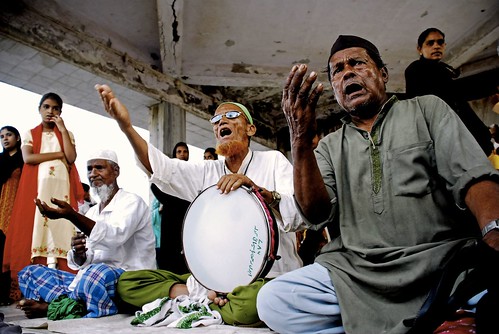
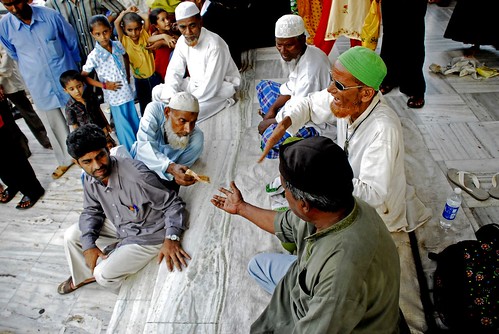
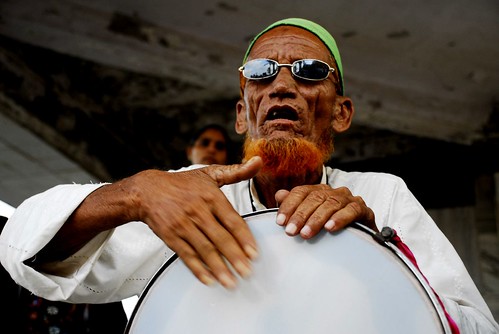
Singing strings, vibrant woods, throbbing drums - he quietly uprears his voice to the beloved - as if not from strings, not from wood nor from drums but from himself comes the voice of the beloved. The Qawwalli is over. Their task is done, the musicians carry away their instruments; the assembly disperses, each listener carrying away with him the fullness of the sound that lingers over the marble tomb now silent. What is the power of this sound, how does this music speak, welcoming all with a familiar message while revealing to a seeker realms beyond his knowledge, leading each on his own path yet joining all in the fervor of a shared musical experience.

Qawwalli

Qawwalli


Tambourine Qawwalli, Haji Ali, Mumbai


If you guys are interested in the partaking in some Qawwalli music - I suggest you report at Haji Hali Dargah[which is a sight by itself] around 4 o'clock - It usually happens everyday but then again you are at the mercy to whims of these musicians.

Haji Ali Dargah, Mumbai

Elle and Masculinity

This is fairly embarrassing

Heretofore, men's personal grooming has been more a matter of maintenance than augmentation; a haircut as opposed to a henna treatment. Or at least that is what I thought. To be honest I must admit, before last month I've never quiet used a "cosmetic" of any type except may be on the odd occasion it was forced on me by my sister or a girlfriend.

No, I wasn't afraid it would rob me of my manliness, it is just so complicated - a powder bronzer, a concealer and kohl liner for eyes and lip balm in three shades: natural, fair skin and tawny - see it is a rocket science.

Therefore, it was a fairly unique experience when I was told I would need make - up for the shooting of the above picture [the one on the right obviously]. It is also true I would need all the help I could get.

Anyways, I quiet liked the use of these ''bold, virile line of revolutionary tools'' designed to ''enhance masculinity'' and ''offer each and every man the right to be naturally handsome" or at least this is what I told myself as the friend I had brought along died laughing at my side.

So yes

''Dude, where's my concealer?'

Oh yes as a shameless effort to document this we made a video - it is hilarious at my expense of course.

Heart of Darkness

S-21, Tuol Sleng Prison Facility of the Khmer Rouge
[A middle-age Khmer women walks past the row cells at Tuol Sleng Genocide Museum]

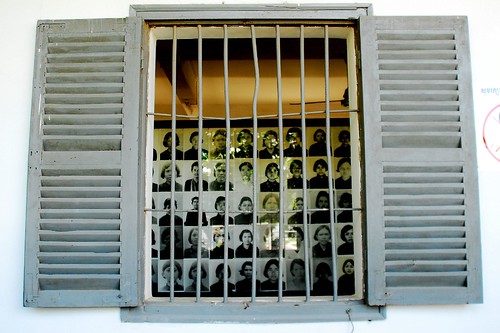
Tuol Sleng was a high school before the Khmer Rouge set up a detention center here in May 1976, and it has been open as a genocide museum since 1980. During its life as a prison and torture center more than 10,000 adults and anywhere up to 2,000 children were processed through it, spending their final days being degraded and tortured before being taken to the Killing Fields outside town to be murdered and interred in mass graves.

The details of what happened there are horrific, a reminder of what happens when a regime dehumanizes its subjects. As we entered we passed the classrooms on the ground floor, which were used as interrogation rooms. The doors are locked, but looking through the windows we could see the steel framed beds, car batteries, and iron clubs that were used to dole out punishment to “enemies of the Khmer state.”

S-21, Tuol Sleng Prison Facility of the Khmer Rouge
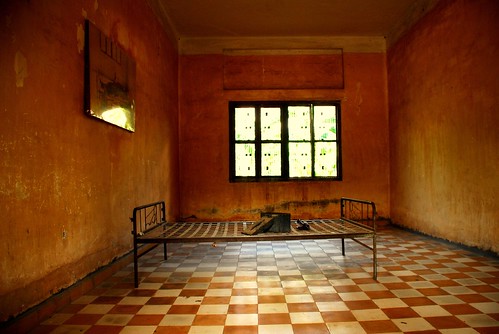
[One of the larger cells at S-21 that housed political prisoners of the Khmer Rouge .]

On the upper levels, as I walked through the tiny brick cells where more important prisoners were held, the crooked walls seemed to close in on me. I was overcome with claustrophobia, fear and the desire to cry at the uselessness of it all. I’d never experienced claustrophobia before. I wanted to flee and gulp down fresh air under the blue sky.

S-21, Tuol Sleng Prison Facility of the Khmer Rouge
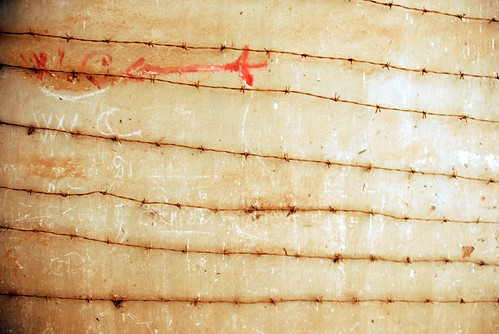
[The frame of Khmer women and her son through the barbwire fences of S-21]

Despite this I was drawn back in. I wanted to see everything that S-21 had to offer. I wanted to try to understand what had gone wrong here.

But at the same time I felt uneasy. Here I was, a relatively wealthy individual visiting a third world country still suffering from the consequences of the very events whose notorious landmarks I was visiting as a tourist.

S-21, Tuol Sleng Prison Facility of the Khmer Rouge

S-21, Tuol Sleng Prison Facility of the Khmer Rouge

By the time we got to the three rooms whose walls were lined with photos of the victims I was numb. Looking at the faces of thousands of Cambodian men, women and children I searched for something that might tell me their story. The Khmer Rouge had been meticulous in keeping records of their acts, including these photos of each of their victims, which now act as a chilling reminder that real people suffered and died here.

S-21, Tuol Sleng Prison Facility of the Khmer Rouge
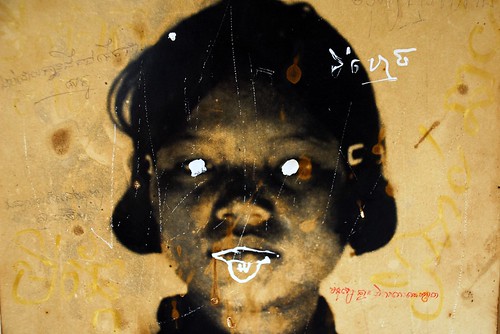
[Defaced and Graffitized portraits of former Khmer Rouge soldiers on the walls of the Toul Sleng Genocide museum. Even after 20 years many of the Khmer Rouge have not been brought to justice for their war crimes]

S-21, Tuol Sleng Prison Facility of the Khmer Rouge

Good Morning Phnom Penh

Phnom Penh
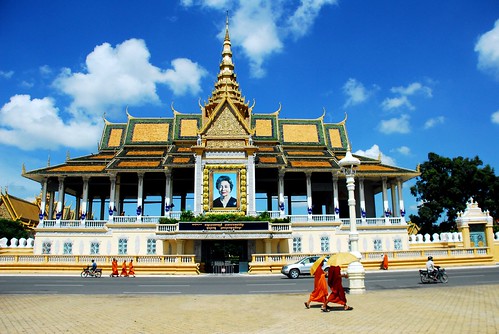
[Buddhist monks walk past a giant portrait of the Queen at the Royal Palace, Phnom Penh]

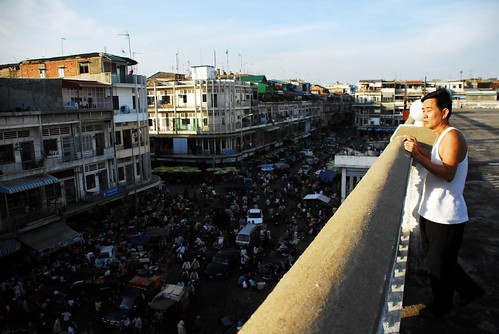
Phnom Penh wakes up early to take advantage of the cool morning breeze before the sun breaks through the haze and invades the country with sweltering heat. Already 6 A.M and the people of Phnom Penh are rushing and bumping into each other on dusty, narrow side streets. Waiters and waitresses in the black-and-white uniforms swing open shop doors as the aroma of noodle soup greets waiting customers.Street vendors push food carts piled with steamed dumplings, smoked beek teriyaki sticks, and roasted peanuts along the sidewalk as they begin to set up for another day of business.Children in colourful t-shirts and shorts kick soccer balls barefoot ignoring the angry grunts of food cart owners. The wide French boulevards sing with the he buzz of motorcycle engines, squeaky bicycles, and small cars for those wealthy enough to afford them. By midday, as temperatures soar, the streets go quiet again. People rush home to seek the relief from the heat, have lunch, take cold showers and enjoy an afternoon siesta before returning to work at 2 p.m.


[Food-carts on the streets of Phnon Penh]

Cyclos of Phnom Penh
[Cyclos and other traffic outside Psar O Russei in Phnom Penh]


I'm staying on the first floor of the Hotel Renakse, a bright yellow neo-classical French building looking out at the Royal Palace. As you walk out you notice the streets of Phnom Penh do not have traffic signals; instead, uniformed policemen stand on raised metal boxes, in the intersection directing the sometimes chaotic flow of traffic. I've found my favorite way to travel in Phnom Penh is by cyclos. They're the opposite of cycle-rickshaw in India as they pretty much resemble a wide wheel chair attached to a cycle. You just take a seat and pay the driver to wheel around the city as you bounce and laugh as the driver pedals you the congested city streets.

This morning like mornings in Cambodia I've walked to my favourite noodle soup shop about a block away from my hotel. The tiny confines of the shop come alive to the sound of the clang and clatter of spoons against the bottom of their large bowls, the slurping of hot tea and soup, the smell of garlic, cilantro, ginger and beef broth in the air make my stomach rumble in anticipation. Across from me, a man uses chopsticks to shovel noodles into is mouth. Next to him, a girl dips chicken into a small saucer of housin sauce while her mother cleans her teeth with a toothpick.

Phnom Penh
[A man looks down at the crowded market scene below in Phnom Penh]

This is Phnom Penh in morning and it feels like home.

Also a big shout out to Tharum, Phatry, Geoff and Joe for making my stay in the city so much fun. Thanks guys !

Floating Villages of the Tonle Sap

Tonle Sap: The Flowing Heart of Cambodia
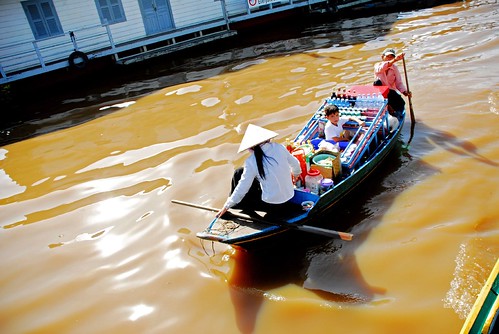
[Floating Shop on the Tonle Sap at the Phnom Krom village]

I fell in love with the elemental power and beauty of the waterways of Cambodia . An entrancing waterlogged world, a stream so abundant and all-providing, a true river of life for its millions. Crisscrossing its pale-brown waterways on flitting boats and ferries, I was moved by the grace and purpose of people absorbed in its amphibious rhythms: journeying, planting, harvesting and netting.

Tonle Sap: The Flowing Heart of Cambodia
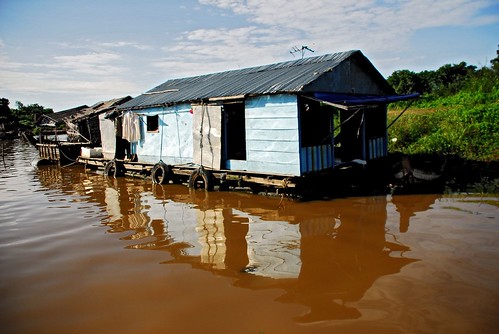
[Typical House in the Phnom Krom village which rise and wall with the tides of Tonle Sap river]

Thursday morning I watched life on , sampans, cone-hatted passengers, boat-dwellers steaming and frying their supper to the sound of tinny music.Numerous floating fish farms hug the river's edge, with cages reaching 18 feet into the water filled with fish destined for the factory 40 miles away. My boat wandered among the waterways lined with timber houses perched on stilts others floating on tires.

Tonle Sap: The Flowing Heart of Cambodia
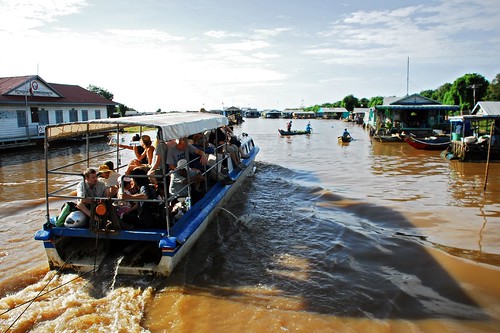
[Tourist Boat on the Tonle Sap river]

As we slowly move forward past quaint fishing villages, the world floats by in shades of blue and the Tonle Sap seems like a long, wide, lazy, paradise. A pair of brown cheeked Kingfishers perch themselves elegantly on a pole, ignoring us as we slip slowly through endless beds of floating weeds.

Tonle Sap: The Flowing Heart of Cambodia
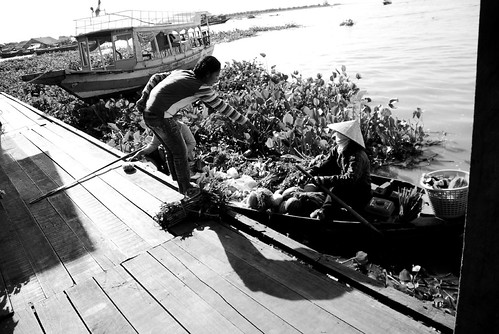
[Women at Phnom Krom buys her groceries from a floating vendor]

As I travel through Cambodia I realize that much of the nation's psyche is connected to water – the waterways of the Tonle Sap and the Mekong river.


"Thanks to the water, and thanks to the moon," my guide tells me.

"The water provides many things -- water gives us life."

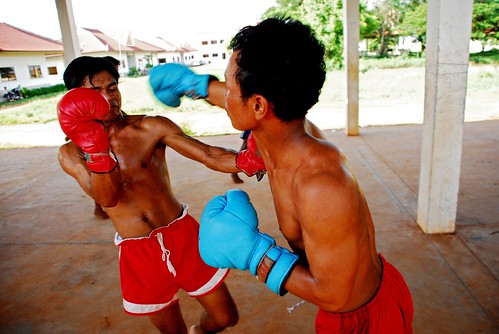
Khmer Boxing : You Like Pradal Serey ?

Khmer Boxing

Today I learnt that Thai boxing isn't Thai. It is Cambodian.

"You like Pradal Serey (Khmer Boxing)?" my driver,a young enthusiastic man,asked me.

"Yes," [I lied, well I didn't quiet know what it was] I said. "Do you?"

"Yes very much", he beamed

I seemed to have hit a chord here - for my usually quiet moto driver started to spurt out large continuous sentences in broken English about the sport - it was was as if I had asked an Indian if he/she liked cricket. He went on to tell me how he once housed dreams of becoming a boxer himself but he had to stop when his girl friend frowned upon it (a very sad story indeed).

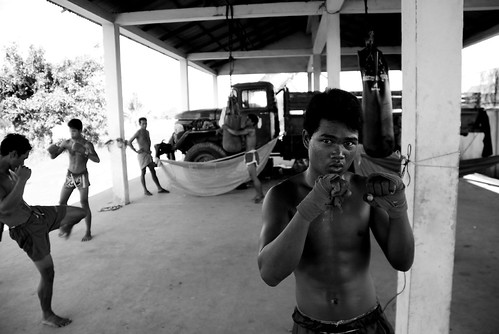
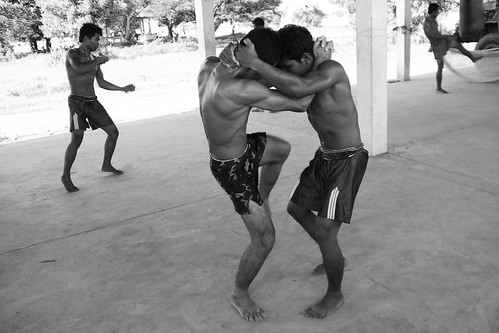
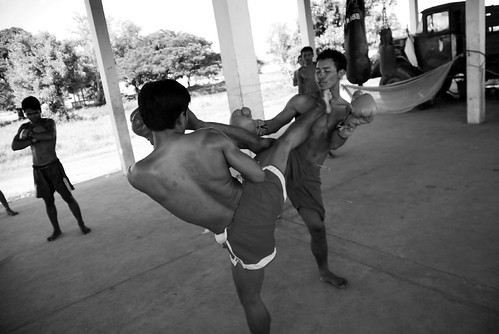
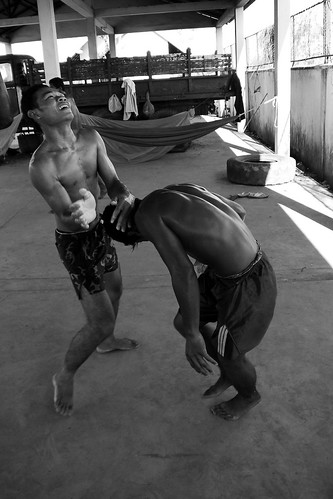
The gym, was a converted open-air garage with all the sweat, dedication, and poor-boy desperation of classic boxing gyms of yore. It had no ring, some punching bags, and padded equipment strewn across the floor. As I was changing in the back, I noticed three students taking a siesta on hammocks tied to a pillar at one end and what looked like a broken down military truck at the other. It was 2 p.m. Given the muscle-sapping heat of Cambodia, Khmer boxers practice early in the morning and late in the afternoon, sleeping the humid midday hours away.


I was lucky to find my instructor - Sang Kim Sean, a Grand Master of Khmer Bokator. Though more than sixty years old, he looked as if he was in his forties, and moved like a man much younger. I was scared.

We started with the basics, which are always the hardest to learn. Khmer fighters start with their hands high and their elbows out to create a cage around their head. When elbow strikes are an option, you would much rather create an impenetrable defense around your skull and leave your rib cage open than the other way around.

It took all of 10 minutes—OK, it was more like 3 — before I was gasping for breath and Sang was sitting me down and handing me a bottle of water.

"Siem Reap is hot," he said, trying to look sympathetic towards this barang [foreigner].

Khmer Boxing Training

Khmer Boxing

Khmer Boxing

Khmer Boxing

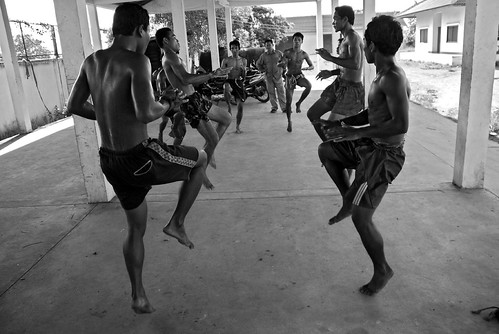
The key to Khmer Boxing is shin kicks, delivered in roundhouses to the legs, ribs, and head. Khmer fighters start training in year-round camps at the age of 10 or 11. Many start their professional careers at 13. If they are lucky, they will make it and continue to fight till 25. To turn their shins into weapons, they spend hours beating them with wooden staffs to calcify the bone. Sang's shins looked like they had barnacles beneath the skin.

"Pradal Serey is not karate. Drive through the body," Sang said, as we practiced the full commitment of a Khmer roundhouse.

When I was a boy, we used to have a game where two of us would exchange punches to the arm until one of us quit. This is Khmer Boxing, only with kicks, punches, knees, and elbows.

The Fight

Khmer Boxing

Khmer Boxing

siemreap3 199

I had had enough by this point and I turned from fighter to spectator. The training was pretty brutal, each fighter had locked his arms around the other's head, and they exchanged brutal knees to each other's chests. Back and forth it went until one gasped for air and then they stopped. I assumed that was it, and they would return to fighting strategically, looking for an advantage to win decisively. Again they ran toward each other, locked up, and spent the next three minutes exchanging knees, one-for-one. Again, they did the same routine. I've never seen anything like it. Their chests were pulped like raw meat, but they didn't seem to care. It was a test of fortitude to see who could remain standing. The fight over, they exchanged smiles and shook hands, the gloves were off and we went on a series of warm-up exercises.

Hopefully I'll get to see a real fight when I get to Phnom Penn - I've been told take plenty of pictures and bet 5 dollars on a Khmer box in a blue shorts whose name I can't quite remember.

Mister, you want my postcard ?

Mister, you want my postcard ?

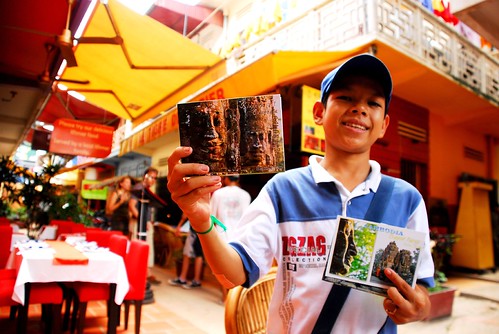
I turn a corner off Bar Street towards Psar Chas. Two Khmer children – a boy and a girl - lay in my pursuit. A loud Khymer confab is exchanged as the children run towards me. The boy has obviously won as the girl discontinues her pursuit. One often runs into children at street corners trying to sell you souvenirs – bracelets, postcards, photocopied versions of Lonely Planet, t-shirts etc.

“Mister, you waannt my pooostcard”, he spurts out in a singsong Khmer accent.

"I have many pictures Mister, Angkor, Bayon …………"

"You’re from India Mister ?" [I nod]

"If I tell you capital of India – will you buy my postcards Mister ?"

"Captial of India? – New Delhi" [Impressive]

"Capital of Finland ? – Helsinki" [He’s good]

"I don’t need any postcards,” I tell him

"Buy my postcards and I’ll leave you alone Mister" [Blackmail – good touch]

"Do you have a girlfriend Mister ?"

"No", I reply

“May be you get girlfriend if you buy my postcard” [he smiles]

I briskly remove my wallet.